Thursday, 28 April 2016

Automobile Design


  • To design a car it usually takes about 3 years, sometimes a little more, sometimes a little less. The phase they usually start off with is the sketching phase.  The sketching phase is just them drawing a bunch of different pictures of the car. 
  •  Design is called problem solving because the people have fine arts degrees, but what they are doing isn't fine arts. They have criteria that they need to meet and draw their design based on it. It is essentially solving a problem. 
  •  The feasibility stage is when the workers need to put the sketches on a "package" and match them up with something that maintains the theme. This is the biggest stage.
  •  I think that designing an automobile would interest me more than the other jobs in the automotive industry, such as automotive technicians, but I don't really think it would be my first job choice considering I don't really care how my car is made as long as it runs and it works good.  Designing an automobile might be fun but like I said it doesn't interest me that much to be considered a "dream job" or anything.  

Automobile Body Styles

Coupe:


   Coupes are often the sporty variants of saloon cars, with 2 doors. The coupe body style varies from car maker to car maker, and now there are even four-door coupes like the Mercedes-Benz CLS-Class. The name ‘coupe' comes from the French verb ‘couper', which means ‘to cut'. An example of a two-door coupe is the Audi A5.  The Audi A5 is a compact executive car produced by the German automobile manufacturer Audi since 2007.

image:  https://upload.wikimedia.org/wikipedia/commons/2/25/Audi_A5_Coup%C3%A9_2.0_TFSI_quattro_S_tronic_Gletscherwei%C3%9F_Facelift.JPG

Convertible:


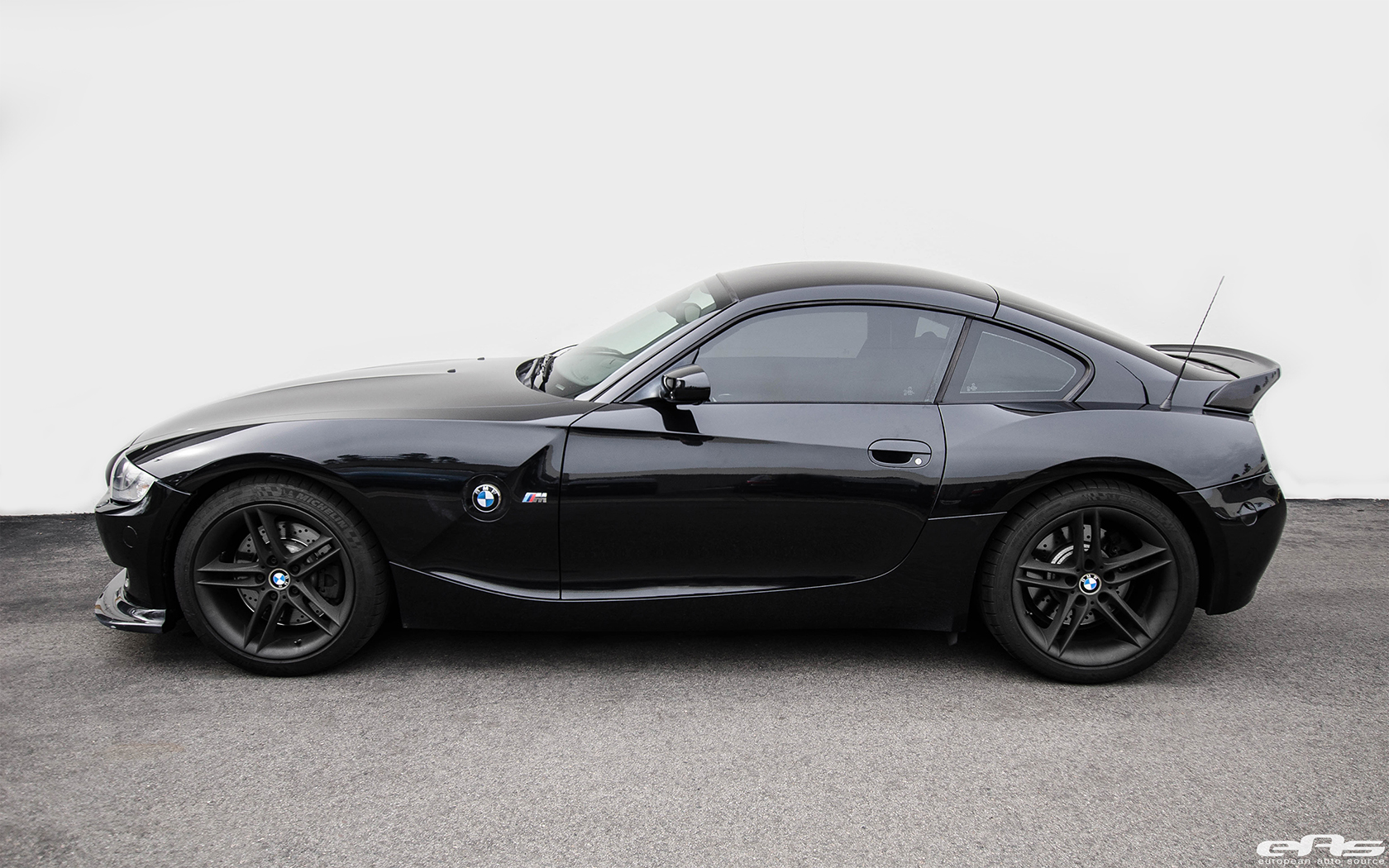
    A convertible, or cabriolet, is a body style with a fold-able or retractable roof.  These cars often have canvas or vinyl roofs, though nowadays these are also made of plastic, aluminium or steel. Convertibles are usually two-door cars. An example of such a car is the BMW Z4. the BMW Z4 is a rear-wheel drive sports car by the German car maker BMW.  First generation production started in 2002 at BMW USA's Greer, South Carolina plant, with production of both roadster and coupe forms.

Image:  http://cdn.bmwblog.com/wp-content/uploads/2016/01/Blacked-Out-Track-Ready-BMW-Z4-Build-2.jpg


SUV:


   An SUV, or Sports Utility Vehicle, is similar to an estate, but usually bigger and higher off the ground. SUVs are often four-wheel-drive and are designed for both on- and off-road use. Some have the towing capacity of a pickup, and offer the passenger carrying capacity of a minivan or large sedan. An example of an SUV is the Ford Endeavour.

Image: http://www.india.ford.com/suvs/endeavour


Crossover:


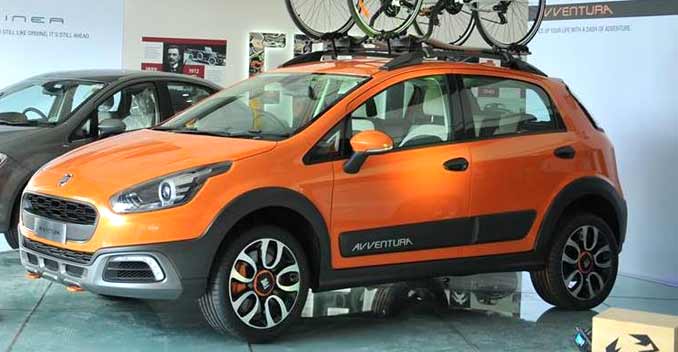
   A crossover is a vehicle built on a car platform but often with features of an SUV like increased ground clearance and a higher seating position. Crossovers are typically designed only for light off-roading. An example of a crossover is the Fiat Avventura.

Image: http://i.ndtvimg.com/i/2014-03/fiat-avventura_625x300_61395388218.jpg


Pickup:


   A pickup is a light motor vehicle with an open rear cargo area known as a ‘bed'. These are extremely popular in the US, and feature factory-built integrated beds. The term also applies to coupe utility vehicles, where they are based on a car chassis or a dedicated platform. Pickups are sometimes called ‘Utes'.  They are often available with two or four doors for the passenger compartment.  An example of a pickup is the Tata Xenon, which features a double-cab design.

Image: http://www.themotorreport.com.au/content/image/2/0/2015_tata_xenon_dc4x2_review_00a-0209-900x480.jpg

Jobs in the Automotive industry

  According to the "ten best jobs in the automotive industry" article the jobs I would enjoy most would be either the F1 Safety car driver or the race car driver.  I would enjoy these the most because there's not much work involved, maybe a little bit of fitness every week but nothing real extreme.  It wouldn't be hard jobs at all, it's just driving cars.  In my opinion I wouldn't be smart enough to do engine repairs or anything like that so if I were to get a job in the automotive industry it would have to be something simple like test driving or being a race car driver.  Race car drivers would have some stress like trying to win and things but it wouldn't be too difficult driving a car.  My least favorite job would be a skunk works engineer.  a skunk works engineer would be my least favorite because In all honesty I don't have the skills to make cars.    

Wednesday, 27 April 2016

Certification in the Automotive Industry


  • The NATEF is an organization that was founded to improve the quality of automotive technician training programs nationwide at schools. NATEF's primary focus is to examine the structure, resources, and quality of training programs and evaluates them against the standards established by the industry. 


  •  SGS is an organization that was founded to help every person in the automotive industry improve performance and reduce risk. The primary focus of SGS is on the design, construction, and operation of motor vehicle inspection solutions all over the world. 


  •  The ASE is an organization that was founded to improve the quality of vehicle repair and service by testing and certifying automotive professionals. Their primary focus is to promote excellence in automotive repair and service.

Careers in the automotive industry


Questions for the article:

1.   High-tech systems unheard of 30 years ago are now standard equipment on much of the nation’s fleet of vehicles: stability and traction control systems, adaptive cruise control and variable valve timing, just to name a few.
2.  Young people should have skills in math, science, communications and technical skills for a career as an automotive technician.
3.  Some advantages in obtaining an education as an automotive technicians versus other high-tech educational options are; automotive technicians can begin their career after just two years of education, which allows students to get out in the real world sooner- and with less college debt.
4.  Statistics forecasts automotive repair and maintenance industry is expected to add 237, 500 new jobs and have a 30 percent growth rate through 2020.
5.  The automotive technician career is fairly immune to the outsourcing of jobs picking up steam- first manufacturing jobs, now computer programming, customer call-center work, and accounting services all going overseas.
6.  Four positions that an automotive technician can hold in the industry are; with schools and colleges as an instructor, work in the technical services, high performance rebuilding and machining, and work in parts distribution and wholesaling.
7.  The automotive technician role is sometimes called the "portal career" because so many people have started their career in the automotive aftermarket as an automotive technician.

Video:

1.  Some aspects of being in the automotive industry I think I would enjoy would be working out problems for them or doing measurements because I'm good at doing math. 
2.  Some things I found interesting about the video are there are so many things that you are expected to know and be able to do as an automotive technician suck as, plumbing services, electrical stuff, etc.  Another thing that I found interesting was the communication skills because you would often be talking to people in the public.
3.  Life long learning is an important aspect of being an automotive technician because the technology and electronics are always changing.  Everybody has seen it, each year with a new car, there are tons of new technology involved with it, and the technician needs to learn about all the new things quickly in order to make the changes.
4.  Some skills or characteristics that an automotive technician should have are, communication skills, math and science skills, and the motivation to learn.


Tuesday, 26 April 2016

Tech for the Sake of Tech?


  • I found it kind of surprising that most younger people don't care about having smartphone connectivity options in their automobiles. It seems that people between the ages of 21-38 haven't adapted the desire for technology as much as my generation. I kind of thought that they would care about these connections because, technology runs most peoples lives now a days. I strongly don't think my generation will feel the same way about this, my generations lives revolve around technology, mainly smart phones. I think my generation would find it very beneficial because, it just makes access to smart phones 24/7 an even easier goal to accomplish. 
  • I don't think that the technologies mentioned in the article are beneficial to fixing the issue because drivers are obsessed with their phones. No matter how much technology is put into place, the driver still has the urge to check the text or isn't focusing on the road but, is focusing on thoughts of what it could say. People of today are glued to their phones 24/7 whether they're driving or not no matter the risks. 
  • In my opinion and for most other people, the new technologies the vehicles have are always an important aspect to consider while purchasing a new vehicle. Most people always want the newest technology or at least a good enough version that help can be offered to the driver/passengers through its technology. 
  • If I was purchasing an automobile, a really important technology I'd be interested in having in my vehicle would be the camera used for backing up and heated seats. I find I'm an accident prone person and kind of clumsy so I would probably run right into a hydro pole and not even notice. The camera shows u where you.ll end up and what is behind you so I think it would be a huge help and I'd definitely need it. Also I find heated seats great comfort especially for someone who is always cold like me.
  •  A new feature that I think most people would have found useless when it was first introduced is cruise control. I think people thought it was dumb because they could press the gas themselves and stay around the same speed so they didn't feel the need for it. But, in later years, people realized how important and beneficial cruise control could be to them.  

Monday, 25 April 2016

Technologies in Developement


  •    Out of the six emerging technologies discussed in the article the one I think is less likely to happen is the Flying Cars idea.  They may be able to make them but more than likely the price of them will be very high which means only wealthy people would be able to buy them.  Not only would the flying cars themselves be pricey but it would also cost quite a bit to fuel them.  A flying car would need a lot of fuel and from experience two people I know own a mini helicopter and it costs them around $750.00 just for fuel to go for a 1 hour drive.  If they don't make many sales off them then chances are they won't make that much of a profit and will just stop making them.   
  • Out of the six emerging technologies discussed I think the electric battery charging car will have the biggest impact on society.  With electric cars that means instead of having just gas stations you now will have Car-charging stations.  They are working on lowering the price for Li-on batteries.  One possibility for cost reduction is the further development of lithium-polymer batteries, which could potentially be lighter, more adaptable, more rugged and cheaper to produce.  Battery operated cars are going to have a big impact because you will no longer need gas which means you'll no longer need fossil fuels and it will be easier to just charge your car overnight and head out the next day.  Also with the cost of battery power possibly lowering battery powered cars could possibly be cheaper especially without having to pay for gas all the time.
  • Out of the 6 emerging technologies discussed, I think that the almost reality one is the Autonomous Cars. There are already a lot of technologies that are similar to this technology such as cruise control and Ford's self parking cars. I think science is getting quite close to mastering a car that can drive itself so, I believe that in the near future an Autonomous Car might hit the general population.
  • I think this new technology that Ford is working is pretty great. "The Drivers Workload Estimator" is going to be very useful to drivers someday. With this technology it can take some pressure off of drivers and help them to be less stressed by delaying calls. In situations where drivers are under a lot of pressure, the added stress that phone calls and text messages bring could cause accidents very quickly. With this new technology, drivers and their passengers can stay much more safe by not having extra pressures. This helps the driver be able to return back to a normal thought process and be able to avoid potential accidents that could be caused by added pressures in very testing driving situations like big cities or icy road driving.


  • My thoughts on the flying automobile are it seems like a great idea and it looks like a lot of fun.  However my only concerns are if something were to go wrong, even a tiny little thing then your life is at stake.  It would need to be checked by an engineer quite frequently.  Also it would be very expensive, something most likely only wealthy people could afford which means not as many people will buy them as the company may expect.  It probably costs a lot to make the cars and if they make more than people buy than chances are they aren't going to make as much money as they will hope off them.  The flying automobile may cause a lot of accidents resulting in deaths due to being high off the ground or someone making a mistake and bumping into someone else.  The cost will not only be pricey for the product itself but to gas it will be pretty pricey as well.
 
  • I think that a self driving car would also be an awesome thing to experience but, I think after awhile it would get kind of boring. They would take away the fun from driving experience. Personally I cannot wait to legally drive, I want a fun driving experience so I wouldn't want to have to switch over to a self driving car.  I enjoy driving, i find it amusing so a self-driving car isn't for me.  Driving something some people have a huge passion for and shouldn't be taken away from them. Although they might cut down on accidents, I just think we should take that as it is and move on without the self driving car. Not all change is good and i don't think a self driving car would be good for the populations mental health.


Thursday, 21 April 2016

Automobile Timeline

1908- Henry Ford begins making the Model T.  What I found interesting was they made 10 660 cars in their first- year production.  It's interesting because that's a lot of cars made in their first year.

1911- Electric Starter Introduced.  This is interesting and very important because without Charles Kettering's invention of the electric starter we would probably still be starting our cars by hand cranking or some other way.  Electric starters are simple and easy to use, they're also very quickly and comfortable.

1935- Flashing turn signals introduced.  This is important for safety because when you use signal lights you're letting others know ahead of time when you're about to turn off somewhere so they know to slow down.  Also it's interesting because if the Delaware company didn't invent them then we could possibly be all still using hand signals or signal lights wouldn't be as advanced.

1939-  First air conditioning system added to automobiles.  I find this interesting because without the first air conditioner, there wouldn't be much chance of us having air conditioners now.  


My Video Selections

The Ford Edsel

  • Named after Henry Ford's only son
  • Edsel was ridiculed for and was called the "horse car" or commonly known as the "toilet seat".
  • Ford's cost for marketing and building the Edsel cost somewhere between $250 000 000- $350 000 000.
  • After 3 years the Edsel was declared one of the auto industry's biggest flop.
The invention of the automobile
  • The early automobiles originally used the steam engine as their main source of power, they were slow and uncomfortable for passengers.
  • Henry Ford was inspired by an early steam engine.
  • By the early 1900's a lot of companies had began to make automobiles but Henry Ford brought it toward the public eye.

Wednesday, 20 April 2016

Henry Ford and the Model T


1.  The assembly line was changed by suggestions of 3 of his employees to not just have an assembly line where the workers moved down the line but to have the line move while the workers stayed in one place instead.  That way people could major in one skill and do that all day.  The skill of holding a wrench and turning a bolt all day could be taught very easily to unskilled people.

2.  Workers tended to stay longer and be more committed to Henry Ford's company than other companies at that time because he wanted to be fair with the wages he gave.  He gave really liveable wages to his employees.

3.  The Model T cost a little over $1000.  It was manufactured for the common man.

4.  The Model T's price dropped to $800 and then dramatically dropped to a little over $365.  I think the price dropped because of all the Model T's that were made, which they needed to be sold and because of how the times were, many people couldn't afford the higher prices.

5.  As the Model T became the main mode of transportation, the automobile offered people the freedom to travel.  They could go wherever they wanted whenever they wanted to.  People could travel for fun and not have to rely on railroad lines.

Video Assignment


https://docs.google.com/document/d/1w-dWgduafyhlwCm0gZk0FqnkrwIXyA-uh6fU2zjQ1Cw/edit?usp=sharing

Tuesday, 19 April 2016

Looking at the History of the Automobile

                                                                             Carl Benz

1. The automobile has been around for 120 years.
2. A patent is a government authority or licence conferring a right or title for a set period, especially the sole right to exclude others from making, using, or selling an invention.  3. When Carl Benz obtains a patent in January of 1886 for his invention he described the automobile as a "vehicle with gas engine".
4. In August of 1888 Carl's wife, Birtha and his two eldest sons test drive his automobile, without him knowing.  The first petrol station is born from this.
5. The "axial pivot steering system" helps with the problem of not being able to steer the front two wheels simultaneously. 
6. When the two automobile companies are merged it is called "Mercedes Benz"
7. As a pioneer in technology what Benz experienced that many other pioneers will never experience is that he lived to see his dream come true, which was the breakthrough of the automobile.